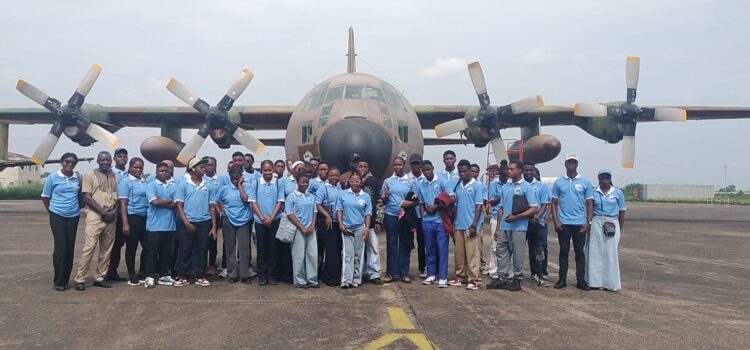
CUIB Engineering Students Bridge Theory and Practice with Exclusive Field Trip to Douala Air Base 201
In an effort toward aligning classroom theory with real-world industrial application, students from the School of Engineering at the Catholic University Institute of Buea (CUIB) recently concluded a highly successful academic field trip to the Base Aérienne 201 (Armée de l’Air) in Bonapriso, Douala. The educational excursion brought together aspiring engineers from both the Buea and Douala campuses, representing the institution’s four primary engineering disciplines: Chemical Engineering, Mechanical Engineering, Electrical and Computer Engineering, and Civil and Environmental Engineering. The delegation was led and supervised by the Coordinator of the School of Engineering, Engineer Etta.
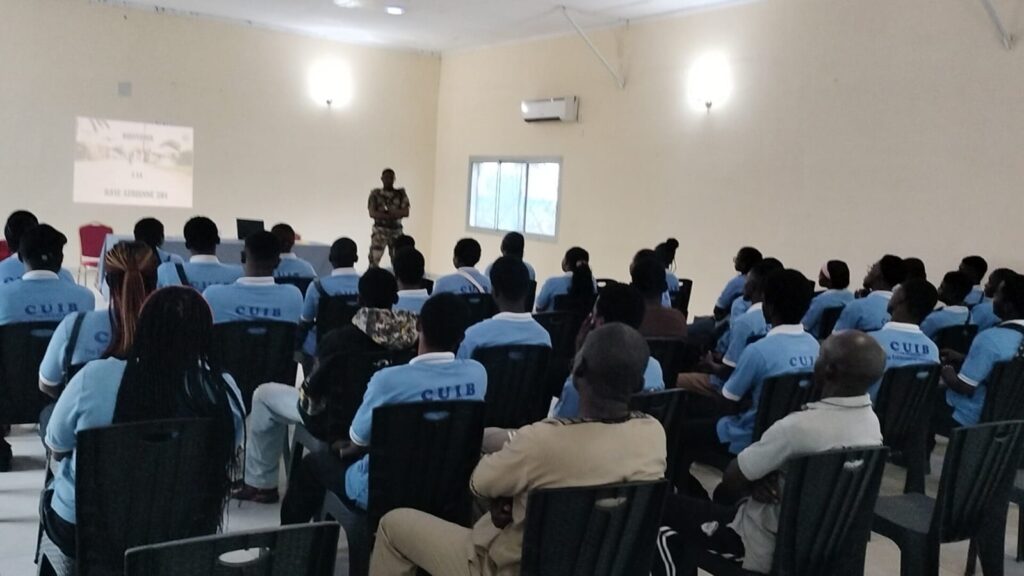
The primary objective of the visit was to demystify the complex operational and structural frameworks of both military and civilian aviation. For these students, the air base served as a massive, living laboratory. Throughout the immersive tour, the future engineers were given first-hand insight into operational procedures, understanding the rigorous pre-flight, in-flight, and post-flight protocols that ensure aviation safety and efficiency as well as aircraft maintenance. Observing how mechanical, electrical, and structural systems are systematically inspected, repaired, and overhauled to meet strict defense standards. At the level of aviation career pathways, the students engaged with military personnel and technical experts to explore diverse career opportunities within the aviation, defense, and aerospace sectors. The field trip provided an invaluable platform for the students to witness the intersection of their respective fields in a singular, high-stakes environment. Civil and environmental engineering students observed the infrastructure and runway maintenance, electrical and computer engineering students examined sophisticated avionics and radar systems, while mechanical and chemical engineering students focused on propulsion, aerodynamics, and aviation fuel systems.
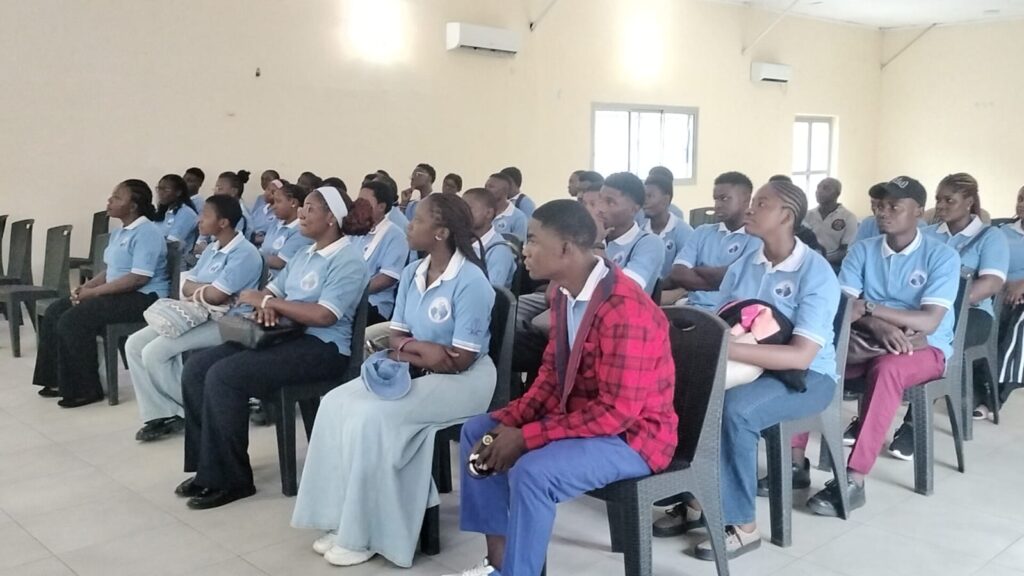
”This trip was designed to push our students beyond the pages of their textbooks,” noted the Coordinator, Engineer Etta. “Seeing these massive engineering feats in operation gives them a profound appreciation for precision, discipline, and the sheer scale of the industries they are preparing to enter.” The interactive session proved to be a highlight of the day, with students actively engaging the air base’s technical team in rigorous Q&A sessions, probing into the challenges of modern aviation maintenance and the evolving technology used in defense. By successfully bridging the gap between academic knowledge and industrial reality, CUIB’s School of Engineering continues to demonstrate its commitment to training a hands-on generation of Cameroonian engineers ready to tackle local and global technological challenges.